
Oregon Ramblin' - Part 2
Umpqua to Anacortes the back way


We hiked down from Umpqua Hot Springs, all wobbly kneed and drowsy from the hot soak and magical setting. The air was thick with the smell of evergreen, and the trail was shaded and cool. The springs, cascading pools etched into the mountainside, held the kind of warmth that seeps into your bones. The ancient forest whispered quiet wisdom as we descended the steep path.
Nestled in the Umpqua National Forest, these unique springs are a wild sanctuary from human turmoil. A few hours spent there rejuvenates the most jaded heart. With gratitude for the gift, I prayed farewell to the hot springs, their steam rising to blend with the morning mist.
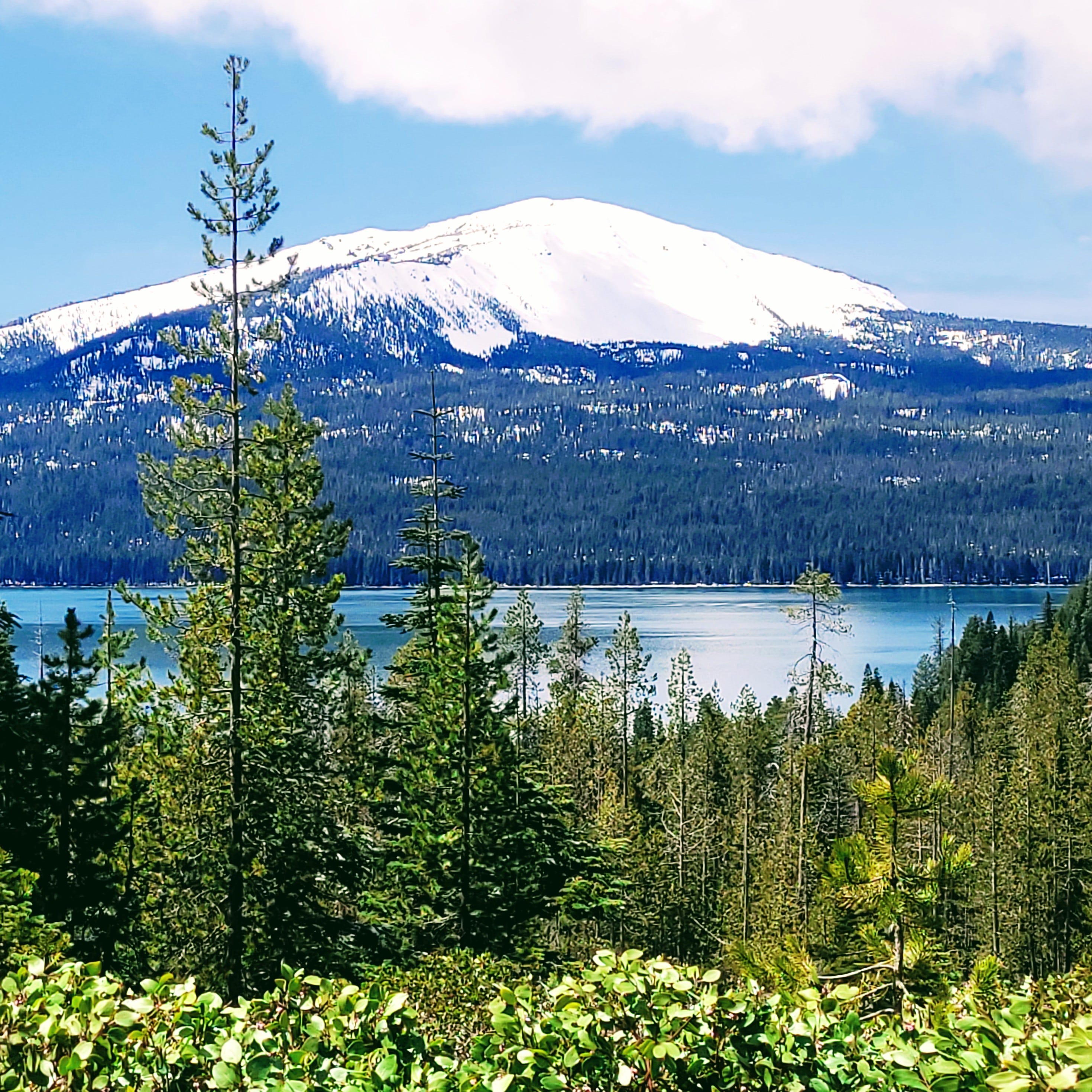
We drove east up the Umpqua River to the high valley where sits serene Diamond Lake. The lake was stunning; its crystal-blue waters reflected the iconic Mount Thielsen to the north and Mount Bailey to the west. We burst four-wheel drive through a snow-drifted entrance to a scenic viewpoint, dismounted Big Red, and stood gob-smacked in the middle of paradise, surrounded by snowy peaks, blue water, deep green forest, and blessed silence.
However, this was a road trip, and even we vagabonds had schedules and destinations to keep. The weather had been atrocious every day except this one, and the forecast was for more mist, cold, and clouds. We decided not to camp in the wet and made tracks for hipster oasis Bend, Oregon. We did our googling research and found a restaurant rumored to serve the best burger in town and a hotel catering to cyclists, hikers, and wanderers. Perfect.
The road into Bend crosses a rolling, heavily forested plateau before winding through impressive volcanic pyroclastic cones just outside town. The lava came from the massive Newbury strato-volcano that last erupted only about 1300 years ago. It is the largest volcanic complex in the Cascades and is continuously monitored. The volcano extends about 75 miles long by 27 miles wide. It contains a 4-mile by 5-mile caldera holding two deep lakes. There are more than 400 live vents in the Newberry. Several hundred thousand people live, work, and play on and in this dangerous sleeping giant.
Years ago, Bend had a reputation as a super-cool, out-of-the-way logger, skier, and biker hangout. It was rumored to be a hard-partying town where skiers and hippies drank beer with loggers and truckers in mossy saloons. But, like other such burgs in the West, this is not Bend anymore. Oh sure, folks still ski and bike and camp and such, but now you need a quiver of skis covering all conditions and styles to do it right. If you're serious, you must have a 5k dollar carbon fiber 28-gear monster mountain bike. Camping nowadays is in an 80k Mercedes Sprinter van decked out with Starlink internet, propane heat, solar panels, and roof racks to hold the toys. Dollar beer with loggers has morphed into pinot noir with the hoi palloi. An addiction to expensive outdoor gear has overtaken vagabond freedom. The wild is treated like a personal gym - a place to showcase inflated competence, financial success, and ego. Materialism replaces spirituality. Privilege runs amok. Such are our times.
As we drove into Bend, along the languid Deschutes River, under limestone cliffs, a lovely park stretched along the river on our right. On our left stood mansions—giant cedar, steel, and glass homes—each bigger and more ostentatious than the last. Old humble hippy Bend had been swallowed by a new class of entitled gear-struck, Tesla-driving, mansion-living snobs. Squatting atop a volcano.
It's not just Bend exhibiting this transformation; it has happened all across the West. Steamboat Springs, Park City, Jackson Hole, Bozeman, Telluride, Taos, Aspen, Mammoth, and Tahoe have all been overrun and lost.
Only one good thing arises from this madness…killer hamburgers.
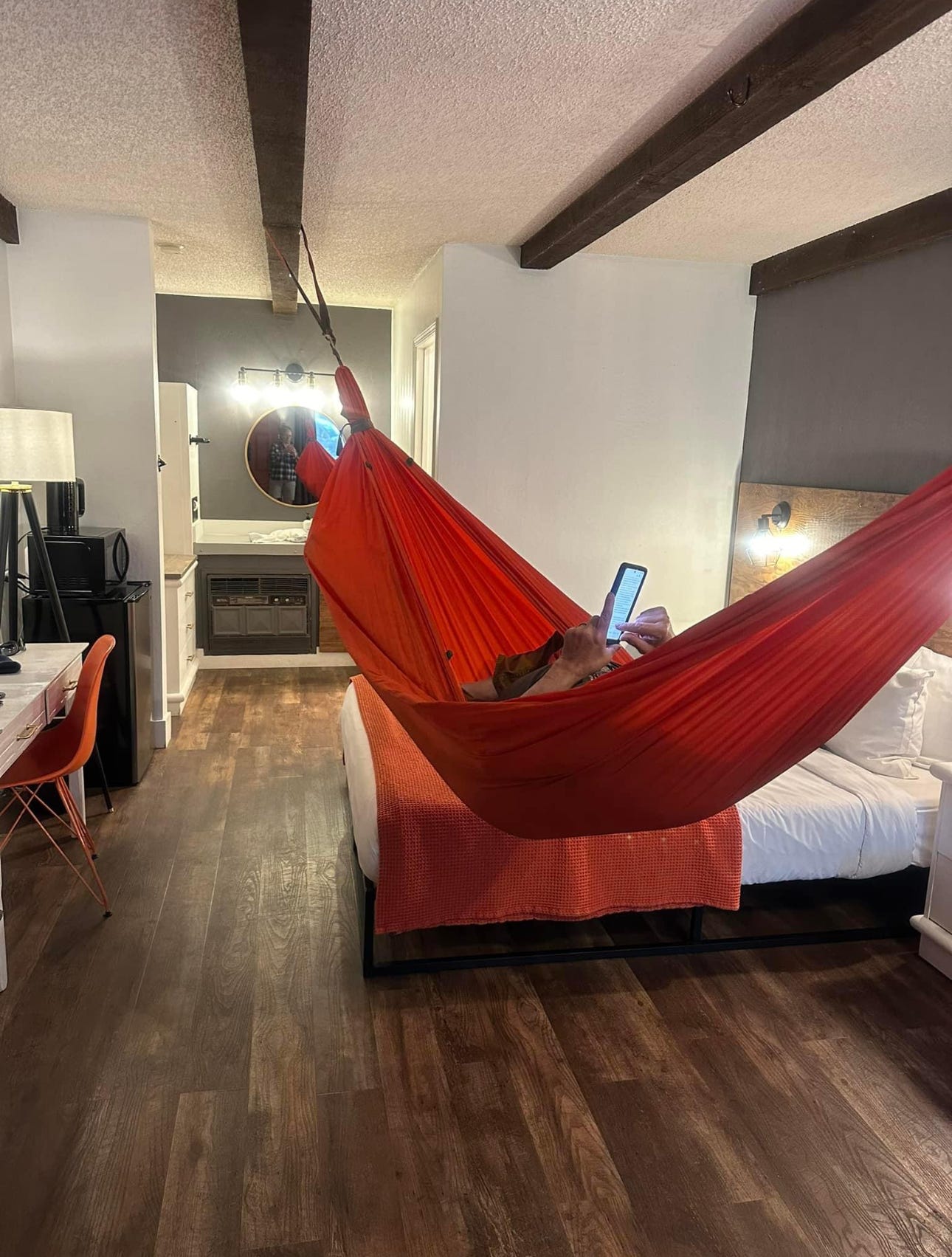
We spent that night in LOGE (Live Outside Go Explore), a unique hotel/hostel for cyclists, hikers, and travelers. LOGE has a minimalist charm—an aesthetic based on the simplicity of the natural world—and is just two steps above tenting. From the bike rack on the wall to the hammock hanging from the ceiling, it is a modern basecamp, a place where the spirit of adventure is woven into the very fabric of the place. Immaculate fire pits outside beg for dreams and tall tales to be told under crystal starlit nights, sharing craft beer and woodsmoke. LOGE aint cheap, but maybe all is not lost after all.
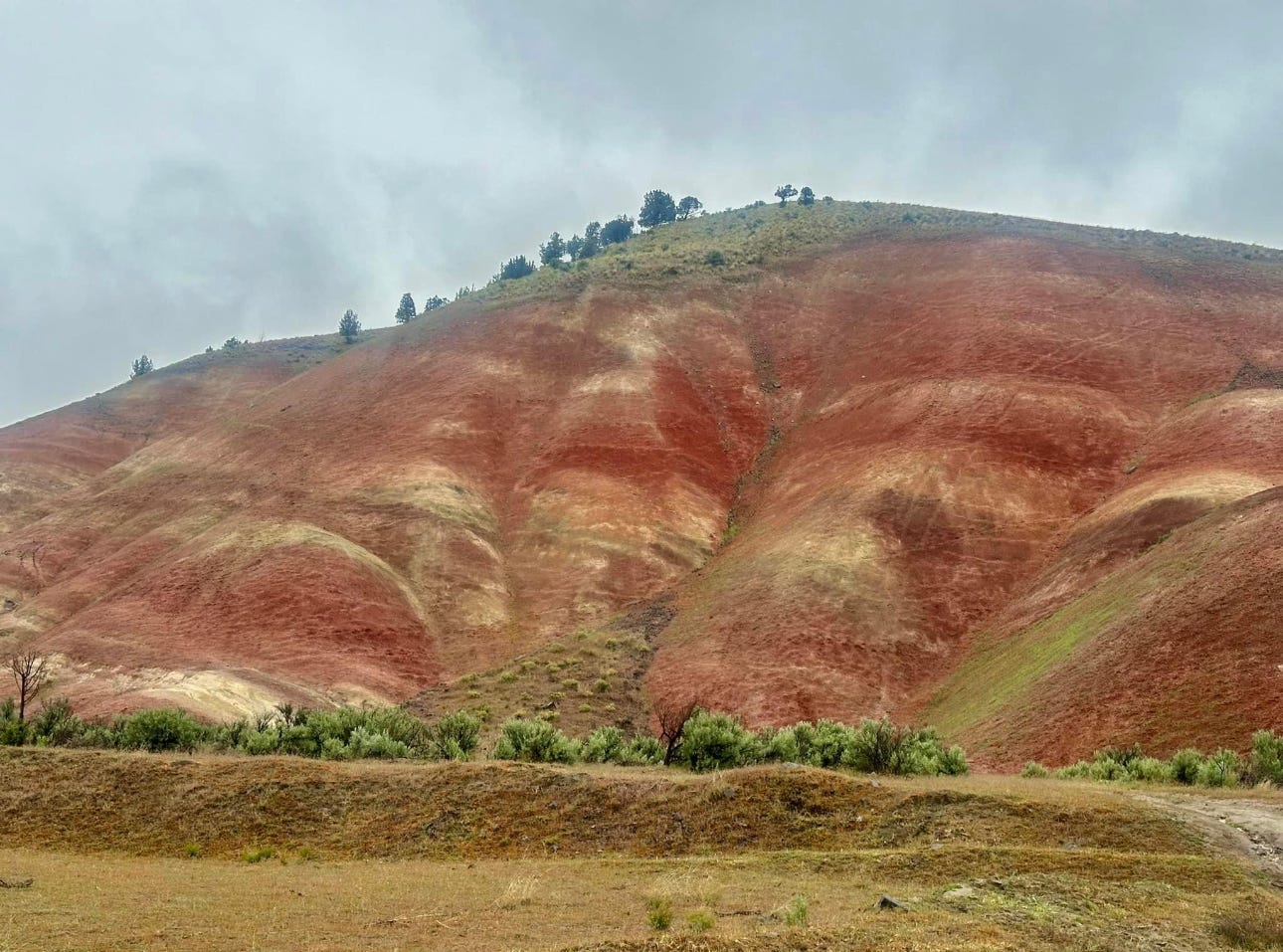
We woke up to a surprise dusting of snow on the grounds of LOGE. Undaunted, we arced away from Bend on a northeast trajectory into wild, sparsely populated Oregon toward the Painted Hills. This wonder, part of the John Day Fossil Beds National Monument, is a testament to eons of natural artistry and is older than the Newberry. The hills are an undulating canvas, each layer a different hue, painted by time and geological upheaval. Reds, yellows, and blacks ripple across the landscape in a surreal dream. I walked among the hills, dwarfed by their silent grandeur, pondering the slow dance of erosion and deposition that crafted such sublime beauty. In my mind, each step I took was in prehistoric forests along ancient rivers below giant volcanos.
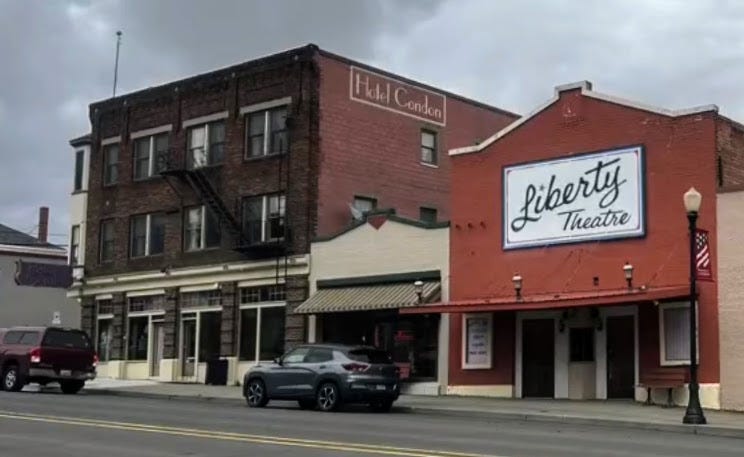
We left the Painted Hills and made our way to the tiny village of Condon. The road to Condon was a ribbon of asphalt through the rolling wheat fields and canyonlands of North Central Oregon. Condon, a small town with an old-soul charm, was a step back to a simpler era. The Hotel Condon, a relic from the early 20th century, stood proudly on Main Street. Its Victorian elegance was a testament to the town’s hopeful can-do agrarian past.
I found a peculiar blend of history and comfort at the Hotel Condon. The creak of wooden floors, the brass fixtures, and the high ceilings spoke of a bygone era, yet the warmth of the hospitality was timeless. I imagined the tales these walls could tell—of weary travelers, local legends, laughter, and tears.
We were the only guests. We had three stories and eighteen rooms, all fully refurbished in early twentieth-century glory, to ourselves. We roamed the plush lobby and landings barefoot, vagabonds in the palace. It was remarkable.
There was a closed, ornate whiskey bar next to the lobby. Across the street was another closed bar and restaurant adjacent to a closed bookstore. The local arts council owned the theater next to the hotel - closed hoping to finance a refurbishment. The streets were clean and recently curbed, and the buildings were in good repair, yet there was no business or traffic. The whole town, aside from the grand hotel, was closed. Everything was in place; everything was ready. But nothing was happening. The town was just this side of dead. The contrast with booming Bend was sobering.
The next morning, loading our bags for an early start after a rich breakfast in the hotel dining room, we spied four or five big construction dudes across the street pointing and grunting at the front of the bar. One of them was the hotel manager/desk clerk/housekeeper, and he crossed the street to chat. I asked him if Covid was to blame for the absence of business in town. Yeah, he said, the restaurant and bar died then, and the whiskey bar in the hotel closed. But, he continued, that man over there is renovating the bar, and the owner’s son is re-doing the restaurant next door and will reopen it in the summer. We have a girl moving back to town to open the bar in the hotel. And the Arts Council is putting together a calendar of art shows and live music. It’s going to be a great season!
I thanked him for a great stay and complimented the hotel. Thanks, he said; safe travels and come back soon. His optimism and hospitality were infectious. I do not doubt that the good people of Condon will work together in a true community to find a way to save their little gem of a town. I wish them well.
The final stretch to Anacortes took us on a well-worn path (to us) over the Columbia River and up the east slope of the Cascades. We crossed Stevens Pass, endured the clotted angry traffic on Highway 2 over the Snohomish River estuary, and finally dropped into the Skagit Valley and Anacortes.
At the end of another ramble, memories of hot springs, high deserts, volcanos, painted hills, and historic towns meld into a kaleidoscope of experience—each place, each moment, the colors, smells, and history, natural and human, layer and overlap each other—enrich.
Embrace the wild places where nature speaks, and humanity listens. Understand that the journey is more sacred than the destination. Go a-roaming with profound gratitude for this land, this life, and the endless road ahead
Peace.
An Enchanted Vagabond will always be free to read and enjoy. You can support my writing habit with a free subscription or the tip jar below. Thanks so much for reading.